
A green pool is one of the most frustrating sights a Port Orange homeowner can come home to — especially in the warmer months, when algae growth accelerates by the day. Understanding what causes it and how recovery actually works is the difference between a week-long fix and a summer-long battle. This guide covers the algae types that hit local pools, the chemical treatments and procedures behind professional green-to-clean pool recovery, realistic response times and costs, and the prevention habits that keep the water clear for good.
What Causes Green Algae Growth in Port Orange Pools?
Green algae thrive when three conditions line up: warm water, available nutrients, and a lapse in sanitizer. Port Orange summers supply the first generously, and the local environment supplies the second — nutrient-rich storm runoff, reclaimed-water irrigation drift, and organic debris all feed blooms. The third condition is usually a maintenance gap: a vacation, a failed pump, or chlorine quietly handcuffed by runaway stabilizer.
How Do Local Climate Conditions in Volusia County Affect Algae Development?
Volusia County's climate is practically designed for algae. Warm temperatures accelerate reproduction — above 80°F, a light tint can become a full bloom in days. Heavy summer rainfall washes phosphates and organic material into the pool while diluting the chemicals that were holding the line. And high humidity keeps overnight recovery from ever really happening in peak season. Effective pool management here means planning for these conditions, not reacting to them.
Which Algae Types Commonly Impact Port Orange Swimming Pools?
- Green algae — the most common by far; it forms a green haze or layer that multiplies quickly if untreated.
- Black algae — the most resistant; it roots into plaster surfaces and requires aggressive brushing plus targeted treatment to remove.
- Mustard (yellow) algae — often mistaken for dirt or pollen on walls and shady spots; it shrugs off normal chlorine levels and needs a specific treatment approach.
Identifying the type correctly is step one of any recovery — they don't respond to the same playbook.
How Is Green Pool Algae Effectively Removed in Port Orange?
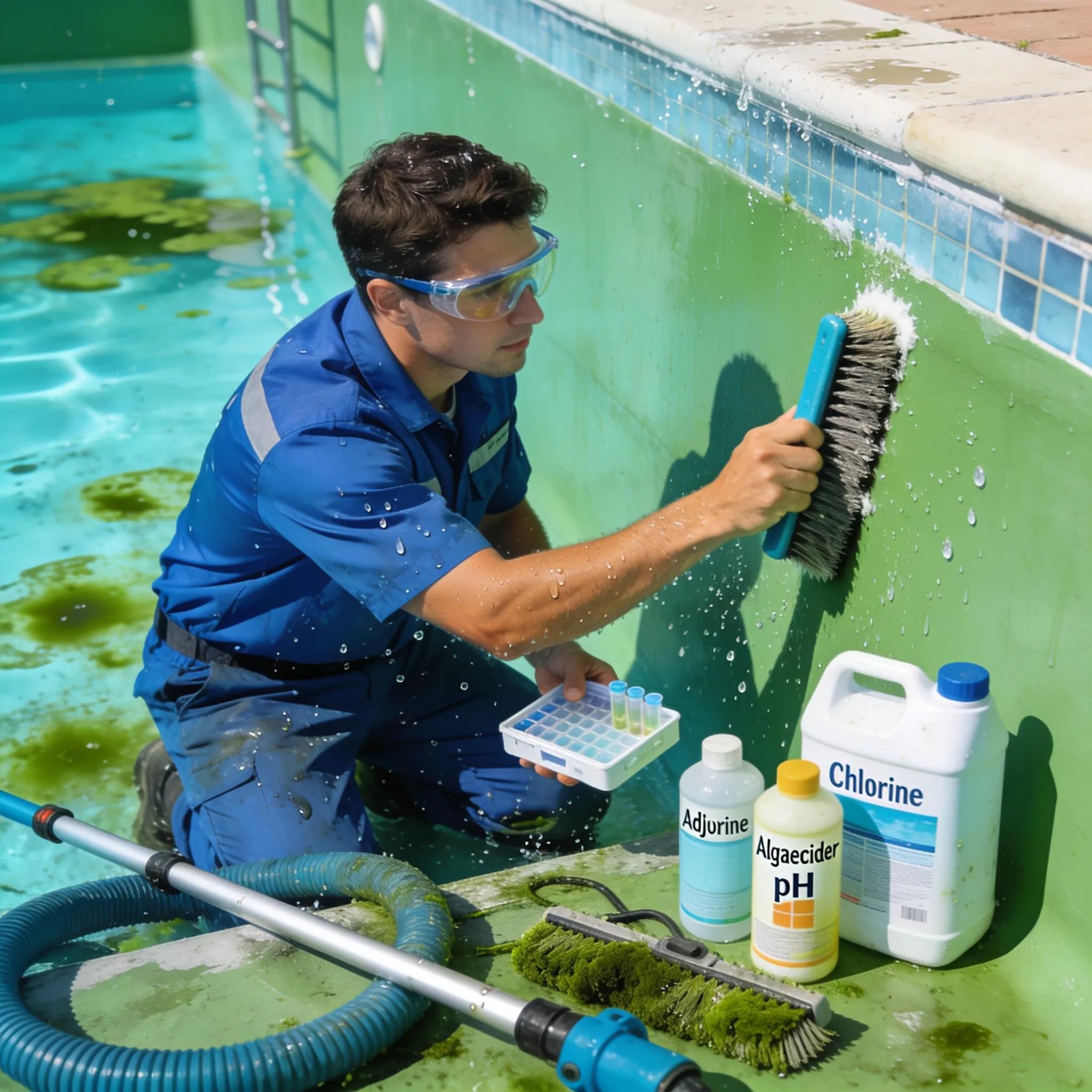
Removing an established bloom takes a systematic sequence — chemistry and physical cleaning working together. The single most common DIY failure is doing one without the other.
What Chemical Treatments and Pool Chemicals Are Used for Algae Removal?
- Chlorine shock — the backbone of any recovery: a high dose calculated to the pool's actual volume and stabilizer level, which is where most DIY attempts underdose.
- Algaecides — supporting treatments targeted to the algae type, useful for mustard and black algae especially.
- Phosphate removers — cut off the nutrient supply so the bloom can't refuel while the chlorine works.
The right combination depends on severity and type — which is why a proper recovery starts with a full water test, not a jug of shock.
What Are the Step-by-Step Emergency Pool Cleaning Procedures?
- Initial inspection — assess algae type and severity, test the full chemistry including stabilizer, and check equipment function.
- Chemical application — dose shock and any targeted treatments to the pool's real volume and CYA level.
- Scrubbing surfaces — brush every wall, step, and corner to break the algae's grip, then vacuum debris.
- Filtration cycles — run the filter continuously, vacuuming and cleaning the filter repeatedly to physically remove the dead algae the chemicals killed.
- Rebalance and prevent — restore full water balance and deep-clean the filter so the bloom doesn't reseed itself.
That kill-remove-rebalance sequence over multiple visits is the entire difference between a recovery that holds and one that's green again in ten days — our full green pool recovery walkthrough explains each stage in detail.
What Emergency Green Pool Recovery Services Are Available in Port Orange?
Port Orange sits squarely on our daily routes, which makes emergency response practical rather than promised.
How Fast Can Emergency Algae Treatment Respond in Volusia County?
Emergency algae treatment in Volusia County typically begins within 24–48 hours of your call, depending on severity and scheduling. Speed genuinely matters: every warm day an established bloom goes untreated, it gets measurably worse — and more expensive to reverse.
What Should You Look for in a Green Pool Recovery Provider?
- A flat quote before work starts — never hourly, never sight-unseen for a severe pool.
- Proof of progress — we document every recovery visit with before-and-after photos in the app, so you can literally watch the water go from green to blue.
- A root-cause answer — a good provider tells you why the pool turned (dead pump? stabilizer lockout? no service for a year?) so it doesn't repeat. If equipment failure caused it, honest scope matters: repairs require a licensed Florida contractor, and we refer that work rather than improvising on it.
How Can Port Orange Pool Owners Prevent Green Pool Problems?
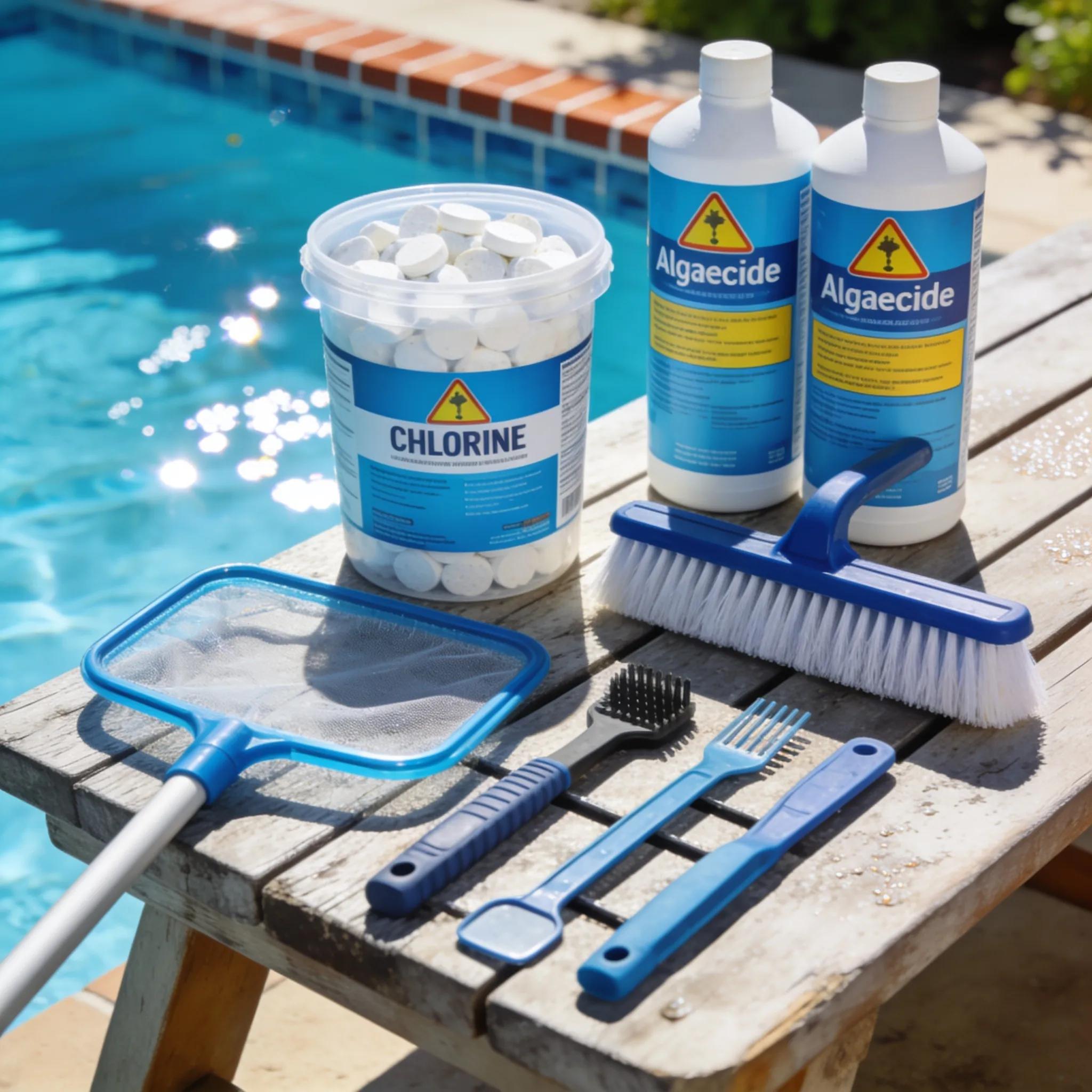
Prevention costs a fraction of recovery — one green-to-clean project typically equals 6–10 weeks of weekly service.
What Preventative Maintenance Practices Suit the Volusia Climate?
- Weekly cleaning — skimming, brushing, and basket-emptying every week, so algae never gets a foothold on surfaces.
- Weekly chemical balancing — chlorine and pH corrected every week, and re-checked after heavy rain, which dilutes everything.
- Seasonal vigilance — peak summer demands the most attention; Port Orange's salt-system pools also fight constant pH creep that weakens chlorine when ignored.
That cadence is exactly what weekly pool cleaning exists to deliver — and how often should you clean a pool in Florida? explains why weekly is non-negotiable here.
Which Regular Chemical Treatments Help Avoid Algae Recurrence?
- Consistent chlorine levels — held at 2–4 ppm so spores die before they organize.
- Stabilizer discipline — CYA kept in the 30–50 ppm range; runaway stabilizer is the hidden cause behind most "but I add chlorine constantly!" green pools.
- pH in range — 7.4–7.6 keeps the chlorine you're paying for actually effective.
What Are the Costs and Scheduling Options for Pool Restoration in Port Orange?
How Much Does Green Pool Cleanup Typically Cost in Port Orange and Volusia County?
Most green-to-clean recoveries in the area run $250–$500 flat plus chemicals, depending on severity — quoted up front after seeing the pool, never after the work. Pools that have been green for months, or that reveal equipment problems, quote case-by-case. Be wary of prices that sound dramatically lower: they usually describe a single shock visit, which kills the algae but skips the removal work that keeps it dead.
How Are Service Appointments Scheduled for Emergency and Routine Cleaning?
Scheduling is direct: request a quote online or call, and for emergencies we prioritize same-week assessment. After recovery, most owners roll into a weekly slot — fixed day, same familiar faces, before-and-after photos of every visit — so the green pool stays a one-time story.
Frequently Asked Questions from Port Orange Residents
How Long Does Algae Removal Take for a Green Pool?
The first treatment visit typically takes a few hours; full restoration takes 4–7 days across several visits for a typical green pool, as repeated vacuum-and-filter cycles remove the dead algae and the chemistry stabilizes. Severe, months-old swamps can take up to two weeks — you'll get a realistic estimate up front, and photo updates let you watch the progress daily.
Can Emergency Pool Cleaning Restore a Severely Green Pool Safely?
Yes — performed correctly, even a black-green pool restores safely without damage to surfaces or equipment. The key is proper dosing for the pool's volume and surface type, and patience through the removal phase. One thing that's not safe in Florida: draining the pool as a shortcut. Our high water table can float an empty shell out of the ground — chemical recovery is almost always the right path.
Keep reading: green pool recovery: what to actually expect walks the full timeline visit by visit, and cyanuric acid: why Florida pools go green explains the hidden chemistry behind most repeat blooms.